
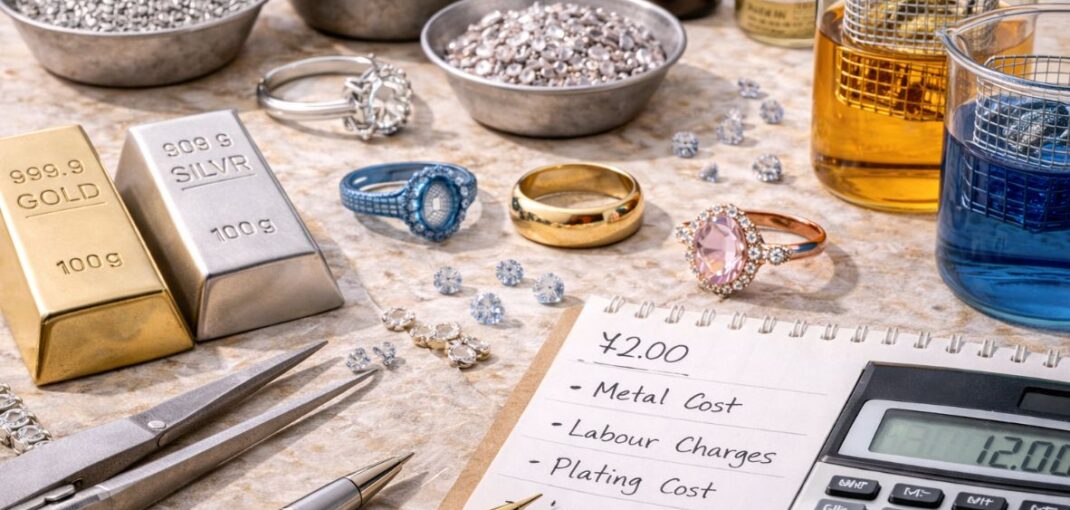
One of the most common questions brands and retailers ask is:
“Why does jewelry manufacturing cost what it does?”
Jewelry pricing is often misunderstood because it combines raw material value with skilled labour, multiple technical processes, and finishing standards. Without clarity, brands risk miscalculating margins, underpricing products, or choosing the wrong manufacturing partner.
In this guide, we break down jewelry manufacturing costs in a clear and transparent way—covering metal, labour, plating, and other key factors—so brands can plan production confidently in 2026 and beyond.
1. Metal Cost: The Base of Jewelry Pricing
Metal cost is the largest and most variable component of jewelry manufacturing.
How Metal Cost Is Calculated
Metal cost depends on:
•Current market rate (silver, gold, etc.)
•Weight of the finished piece
•Expected process loss (casting & polishing)
Common Metals Used
•Sterling Silver (925): Priced daily; widely used for premium fashion jewelry
•Gold: Lightweight designs help control cost volatility
•Brass: Fixed per-kg pricing; ideal for fashion collections
•Stainless Steel & Zinc: Cost-effective, stable pricing for volume lines
Important: Good manufacturers help optimize weight at the CAD stage, reducing metal cost without compromising strength.
2. Labour Cost: Where Craftsmanship Comes In
Labour cost covers all the human skill involved in transforming raw metal into finished jewelry.
What Labour Charges Typically Include
•Casting
•Filing & cleaning
•Pre-polishing and final polishing
•Stone setting (if applicable)
•Finishing preparation before plating
Labour is usually charged per gram or per piece, depending on:
•Design complexity
•Quantity per design (MOQ)
•Number of manual steps involved
Why Labour Cost Varies
•Intricate designs require more handwork
•Smaller quantities cost more per unit
•Poor CAD design increases manual correction
At Yunova Lifestyle, we focus on CAD optimization and batching to keep labour costs predictable even at low MOQs.
3. Stone Setting Cost
If your jewelry includes stones, this is an additional cost layer.
What Affects Stone Setting Cost
•Stone size (micro vs larger stones)
•Number of stones per piece
•Setting method (wax setting vs metal setting)
For example:
•Micro stones (up to 2 mm) are often more economical when wax-set
•Larger or premium stones require skilled hand setting
Clear stone specifications upfront help avoid cost surprises.
4. Plating Cost: Finish, Durability & Perception
Plating is not just aesthetic—it directly impacts product durability and customer satisfaction.
Common Plating Types
•Gold plating
•Rose gold plating
•Rhodium plating (for silver)
•Black / gunmetal finishes
What Influences Plating Cost
•Micron thickness required
•Base metal type
•Finish uniformity
•Post-plating protection (e-coating)
Thicker plating = better durability but higher cost.
The key is choosing the right micron for your usage and price segment, not overpaying unnecessarily.
5. Protective Coating & Finishing Add-Ons
Some designs require additional steps such as:
•E-coating for anti-tarnish protection
•Enameling
•Special textures or matte finishes
These add value but also add cost. Brands should decide based on:
•End-user usage expectations
•Market positioning
•Return risk tolerance
6. MOQ & Quantity Impact on Cost
Quantity has a direct impact on per-piece cost.
Why Low MOQ Costs More Per Unit
•Setup costs are spread over fewer pieces
•Manual handling increases
•Less batching efficiency
However, low MOQ reduces inventory risk, which often saves more money than it costs.
Yunova Lifestyle structures workflows to make low MOQ manufacturing commercially viable for brands.
7. Hidden Costs Brands Should Be Aware Of
Some costs don’t always appear on the first quotation but matter in the long run:
•Rework due to unclear specs
•Delays from unrealistic timelines
•Quality issues leading to returns
•Poor plating causing tarnish complaints
Choosing a transparent and process-driven manufacturer reduces these hidden losses.
8. Why Transparent Pricing Matters
The lowest price is rarely the best price.
A reliable manufacturer will:
•Clearly separate metal, labour, and finishing
•Explain cost differences honestly
•Offer alternatives to reduce cost
•Set realistic expectations
Transparency builds trust and long-term partnerships.
How Yunova Lifestyle Approaches Costing
At Yunova Lifestyle, we believe informed clients make better decisions.
Our approach includes:
•CAD-level cost optimization
•Clear per-gram or per-piece labour pricing
•Plating recommendations based on usage
•Honest MOQ and timeline discussions
•No hidden surprises
We aim to help brands price confidently and scale sustainably.
Conclusion
Jewelry manufacturing cost is not just about metal—it’s the combined result of design decisions, labour skill, finishing standards, and production strategy.
Brands that understand these cost components are better positioned to:
•Set profitable retail prices
•Reduce production risk
•Build long-term manufacturing relationships
If you’re planning new jewelry collections and want cost clarity from day one, partnering with the right manufacturer makes all the difference.
FAQs
1. What is the biggest cost in jewelry manufacturing?
Metal cost is the largest component, followed by labour and finishing.
2. Why do making charges vary between manufacturers?
Differences in skill level, process efficiency, and quality standards impact labour pricing.
3. Is thicker plating always better?
Not necessarily. The right plating thickness depends on usage and price positioning.
4. How can brands reduce manufacturing costs?
By optimizing CAD designs, standardizing components, batching production, and choosing the right materials.
5. Does low MOQ increase cost significantly?
Per-piece cost may be higher, but it reduces inventory risk and improves cash flow.
6. How does Yunova Lifestyle help with cost control?
We optimize designs early, maintain transparent pricing, and tailor processes to your brand’s needs