
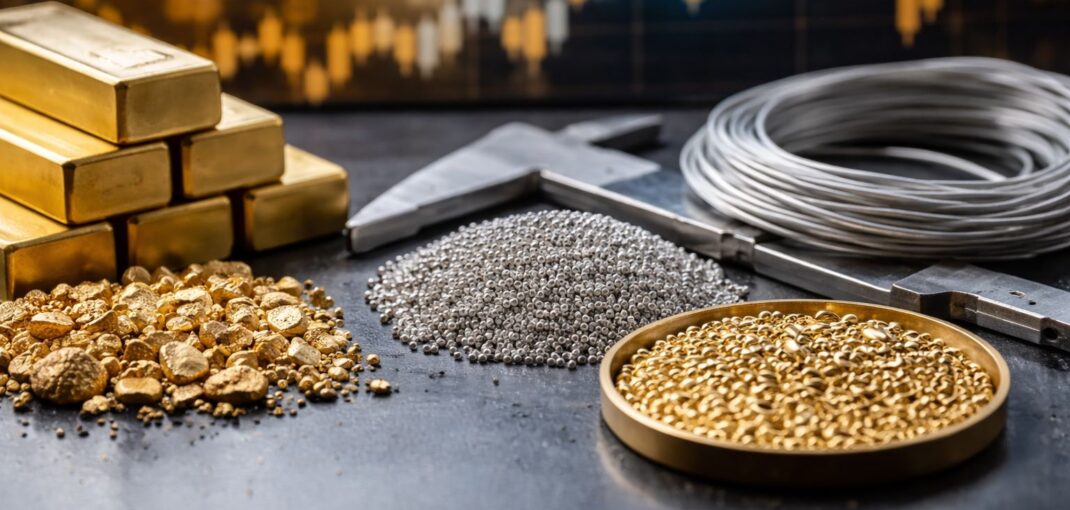
In the jewelry industry, metal prices are not just background numbers — they directly influence product pricing, profit margins, and purchasing decisions. Whether you are working with sterling silver, gold, brass, or stainless steel, fluctuations in raw material rates can significantly impact production costs.
For brands and retailers, understanding how metal rate movements affect jewelry pricing is essential for planning collections, managing cash flow, and maintaining healthy margins.
In this guide, we explain how metal price fluctuations impact jewelry manufacturing and how brands can strategically manage this risk.
⸻
1. Why Metal Rates Fluctuate
Metal prices change daily due to global economic conditions. Some key factors include:
•International commodity market trends
•Currency exchange rate fluctuations
•Inflation and interest rates
•Geopolitical events
•Supply-demand imbalances
For example, silver and gold are traded globally, and even minor market shifts can alter per-gram pricing significantly within days.
This volatility directly affects jewelry manufacturing, especially when metal forms a large portion of the product cost.
⸻
2. The Direct Impact on Jewelry Pricing
In most jewelry pieces, metal accounts for:
•50–80% of total product cost (in silver or gold jewelry)
•30–50% in brass-based jewelry
When metal prices rise:
•Per-piece manufacturing cost increases
•Retail margins shrink if prices remain unchanged
•Brands may need to adjust selling prices
When metal prices fall:
•Manufacturing becomes more cost-effective
•Brands can improve margins
•Opportunity for strategic bulk buying
Even a small increase in per-gram metal rate can significantly affect bulk production costing.
⸻
3. Example: How Silver Rate Changes Affect Pricing
Let’s assume a silver ring weighs 10 grams.
If the silver rate increases by ₹10 per gram:
•Cost increase per piece = ₹100
•For 500 pieces = ₹50,000 increase
This directly impacts production budgeting and wholesale pricing strategy.
This is why manufacturers often fix metal rates at the time of advance payment to avoid future disputes.
⸻
4. Impact on Different Metals
Sterling Silver (925)
Highly sensitive to global commodity pricing. Silver rate movements significantly influence final jewelry pricing.
Gold
More volatile than silver and often subject to sharp market swings. Lightweight engineering becomes critical in gold jewelry manufacturing.
Brass
More stable compared to precious metals. Ideal for fashion collections when price predictability is required.
Stainless Steel
Generally more price-stable and less affected by daily commodity fluctuations.
Understanding which metal to use in which collection can protect brand profitability.
⸻
5. How Brands Can Manage Metal Price Risk
Metal rate fluctuation is unavoidable — but it can be managed strategically.
A. Fix the Metal Rate at Advance Payment
Many manufacturers lock the metal rate on the date the advance is received. This protects both brand and manufacturer from sudden price swings.
B. Plan Bulk Orders During Stable Periods
Monitoring silver and gold trends can help brands plan purchases strategically.
C. Engineer Lightweight Designs
Reducing weight at the CAD stage directly lowers exposure to metal rate volatility.
D. Diversify Material Use
Combining silver with brass or stainless steel in different collections helps balance risk.
E. Maintain Transparent Cost Breakdown
Clear separation of:
•Metal cost
•Labour cost
•Plating cost
Improves pricing clarity and reduces confusion.
⸻
6. The Role of the Manufacturer in Pricing Transparency
A reliable jewelry manufacturer should:
•Share current metal rates transparently
•Clarify how rate fixation works
•Offer cost optimization suggestions
•Recommend weight engineering where needed
•Communicate clearly during volatile periods
At Yunova Lifestyle, we follow a structured pricing model where metal rates are aligned at the time of advance to ensure transparency and avoid future misunderstandings.
⸻
7. How Metal Fluctuation Affects Retail Strategy
Retailers and D2C brands must adjust pricing strategies accordingly:
•Consider dynamic pricing models
•Build buffer margins in volatile periods
•Avoid overstocking during price peaks
•Focus on higher-margin designs when rates rise
Metal price awareness allows better decision-making across the supply chain.
⸻
Conclusion
Metal rate fluctuations are an unavoidable reality in jewelry manufacturing. However, with the right production planning, transparent pricing structures, and intelligent design engineering, brands can manage volatility without compromising profitability.
Understanding how silver, gold, brass, and other metals influence pricing empowers brands to make smarter sourcing decisions and build sustainable growth.
If you are planning a new collection and want clarity on current metal pricing and production strategy, partnering with an experienced manufacturer makes all the difference.
⸻
FAQs
1. Why does jewelry pricing change frequently?
Because precious metal rates like silver and gold fluctuate daily in global markets.
2. Can manufacturers fix metal rates?
Yes, most manufacturers fix metal rates on the date of advance payment.
3. How can I protect margins when silver prices rise?
Optimize design weight, adjust retail pricing, or diversify materials.
4. Is brass affected by global price volatility?
Brass is more stable than silver or gold but still subject to raw material changes.
5. How does Yunova Lifestyle manage metal rate changes?
We align metal rates transparently at the time of advance and support clients with cost optimization strategies.