In today’s fashion jewelry market, plating is not just about appearance — it directly affects durability, customer satisfaction, and brand reputation. Whether you are a jewelry brand owner, retailer, or buyer, choosing between gold plating and PVD coating can significantly impact your product’s success.
At Yunova Lifestyle, we work with global brands to develop jewelry using both plating technologies. In this guide, we’ll break down the difference between gold plating and PVD, helping you make the right decision for your collection.
1. What Is Gold Plated Jewelry?
Gold plating is an electrochemical process where a thin layer of gold is deposited onto a base metal like brass, zinc, or silver.
✔ Key Features:
•Rich gold appearance
•Smooth and premium finish
•Works well for intricate designs
•Available in different micron thicknesses
✔ Common Thickness Levels:
•0.3–0.5 micron → Standard fashion jewelry
•1.0 micron+ → Premium quality
1. What Is PVD Jewelry?
PVD (Physical Vapor Deposition) is a vacuum-based coating process where a metal layer is bonded onto stainless steel at a molecular level.
✔ Key Features:
•Extremely durable
•Scratch-resistant
•Waterproof and sweat-proof
•Long-lasting color
PVD is mainly used for stainless steel jewelry, especially for daily-wear collections.
1. Gold Plating vs PVD: Key Differences
Feature Gold Plating PVD Coating
Base Metal Brass, Zinc, Silver Stainless Steel
Durability Medium Very High
Shine Rich & Luxurious Slightly Matte Premium
Water Resistance Moderate Excellent
Cost Moderate Slightly Higher initially
Custom Design Flexibility Very High Limited
1. Which One Lasts Longer?
PVD clearly lasts longer than traditional gold plating.
Why?
•Stronger bonding process
•Resistant to sweat, perfumes, and chemicals
•Does not fade quickly
•Better for daily use
Gold plating, on the other hand, can fade over time depending on usage, thickness, and care.
5. When Should You Choose Gold Plating?
Gold plating is ideal for:
✔ High-fashion jewelry
✔ Intricate and detailed designs
✔ Stone-setting pieces
✔ Lightweight collections
✔ Premium-looking finishes
✔ Short-to-medium wear cycles
Brands that focus on aesthetics and variety prefer gold plating.
6. When Should You Choose PVD?
PVD is best for:
✔ Everyday wear jewelry
✔ Waterproof collections
✔ Men’s jewelry
✔ Minimal designs
✔ Long-lasting products
✔ Low-maintenance accessories
It’s perfect for brands targeting durability and practicality.
7. Can You Combine Both? (Smart Strategy)
Yes — many successful brands use a hybrid approach:
•Brass + Gold Plating → Fashion collections
•Steel + PVD → Daily wear collections
This allows brands to cater to both style-driven and durability-focused customers.
8. How Yunova Lifestyle Ensures Long-Lasting Plating
At Yunova Lifestyle, we focus on:
✔ High-quality base metals
✔ Proper surface preparation
✔ Advanced plating processes
✔ Anti-tarnish coatings (E-coating)
✔ Strict quality control
✔ Uniform color consistency
This ensures jewelry that looks premium and performs well over time.
Conclusion: Which One Should You Choose?
There is no single “better” option — it depends on your product category.
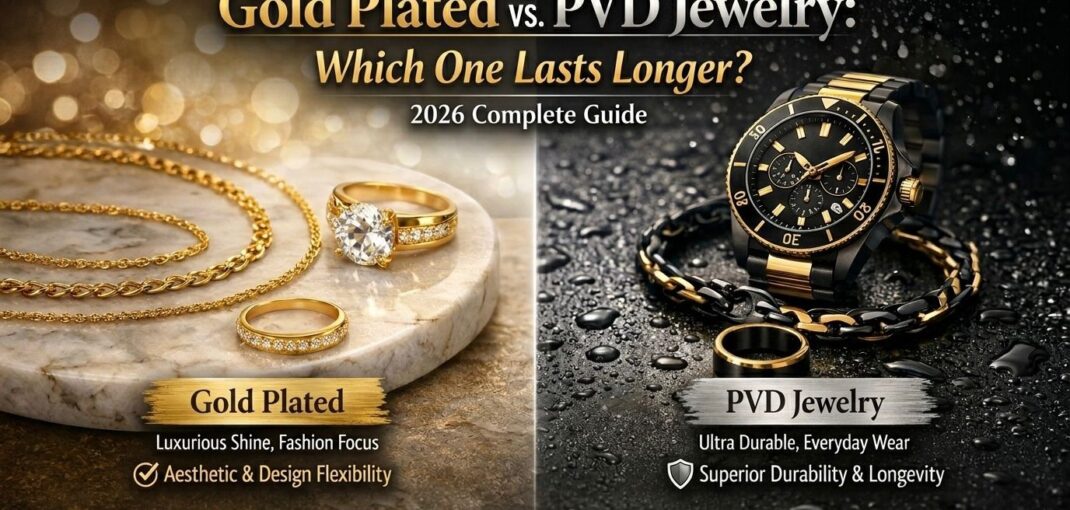
Choose Gold Plating for aesthetics and design flexibility
Choose PVD for durability and long-term wear
The best brands use both strategically.
Looking to Develop Your Jewelry Collection?
At Yunova Lifestyle, we help brands create:
Custom designs (CAD to production)
Gold-plated & PVD jewelry
Lightweight & modular collections
High-quality plating solutions
Zero MOQ sampling
Contact us today to start your next collection.
FAQs
1. Does gold-plated jewelry fade over time?
Yes, gold plating can fade depending on usage and thickness. Higher micron plating lasts longer.
2. Is PVD better than gold plating?
PVD is more durable, but gold plating offers a richer finish for fashion jewelry.
3. Can PVD be done on brass?
No, PVD is typically done on stainless steel, not brass.
4. How long does PVD jewelry last?
PVD can last 1–3 years or more with proper care.
5. Which is better for daily wear?
PVD jewelry is better for everyday use due to its durability.