
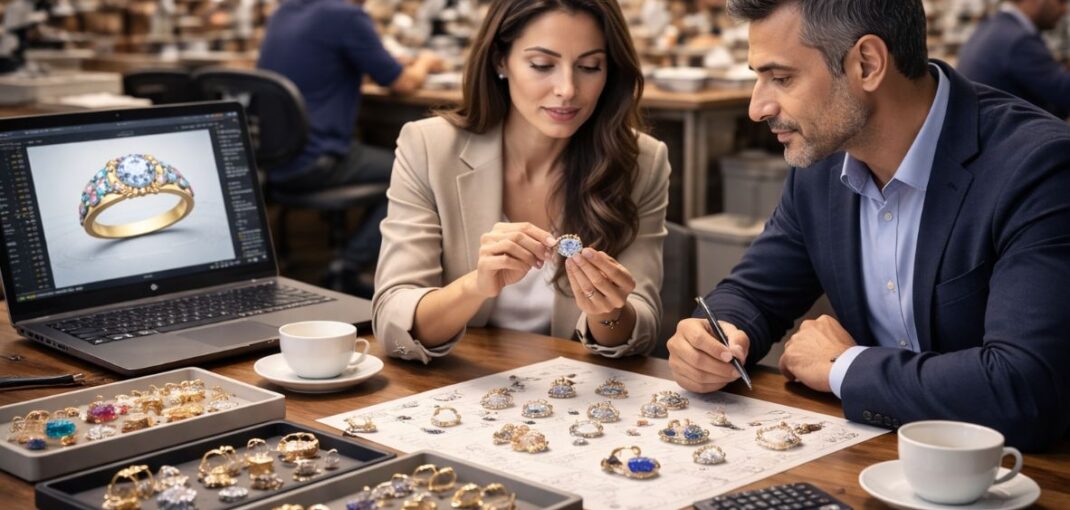
Launching or scaling a jewelry brand involves many moving parts — design development, sourcing materials, maintaining quality, and ensuring consistent production. One of the most important decisions a brand will make is choosing the right jewelry manufacturing partner.
A reliable manufacturer does more than produce jewelry. They help transform ideas into finished products, ensure quality standards, manage production timelines, and support brands as they grow.
However, finding the right partner can be challenging, especially for emerging brands entering the market. Understanding what to look for in a manufacturer can help brands avoid costly mistakes and build long-term production relationships.
⸻
Understanding the Role of a Jewelry Manufacturer
A jewelry manufacturer is responsible for converting design concepts into finished jewelry pieces ready for retail or export. This process involves several stages including:
•CAD design and product development
•Prototype or sample creation
•Casting and metal forming
•Stone setting and assembly
•Polishing and finishing
•Plating and final quality control
Manufacturers who handle most of these steps in-house generally offer better control over quality and production timelines.
⸻
Key Factors to Consider When Choosing a Jewelry Manufacturer
1. Manufacturing Capabilities
Different manufacturers specialize in different materials and production techniques. Some may focus on silver jewelry, while others specialize in brass, stainless steel, or gold.
Brands should look for manufacturers who have experience with the materials and product categories they intend to produce. It is also beneficial if the manufacturer can support multiple metals, as this provides flexibility for future collections.
⸻
2. Design Development Support
Many successful jewelry brands work closely with manufacturers during the product development stage. Manufacturers with strong CAD design capabilities can help optimize designs to improve durability, reduce weight, and ensure production feasibility.
This collaboration helps avoid common issues during casting or stone setting.
⸻
3. Quality Control Standards
Quality consistency is essential for maintaining customer trust. Jewelry pieces must meet strict standards in finishing, stone setting, plating, and durability.
A reliable manufacturer should have structured quality control processes that include multiple inspection stages before products are shipped.
⸻
4. Production Capacity and Scalability
Brands often start with small production runs and gradually scale as demand grows. Choosing a manufacturer who can support both small batches and larger volumes is important for long-term growth.
Flexible production systems allow brands to test new designs without committing to large inventories.
⸻
5. Transparency in Pricing
Clear and transparent pricing structures help brands plan their product margins more effectively. Jewelry manufacturing costs usually include several components such as:
•Metal cost
•Labor charges
•Stone setting
•Plating and finishing
•Packaging or additional services
Understanding how pricing is structured helps brands avoid unexpected costs later in the process.
⸻
6. Lead Time and Production Planning
Jewelry production involves multiple stages, so reliable lead times are critical. Brands should work with manufacturers who can provide realistic timelines and maintain consistent production schedules.
This is especially important for seasonal or festive collections where timing plays a major role in sales.
⸻
7. Communication and Collaboration
Strong communication between the brand and the manufacturer helps prevent misunderstandings during production. Clear design specifications, sample approvals, and regular updates help ensure that the final products meet expectations.
Manufacturers who maintain transparent communication throughout the production process often build stronger long-term relationships with brands.
⸻
Why Many Brands Choose India for Jewelry Manufacturing
India has emerged as a major global hub for jewelry manufacturing due to its combination of skilled craftsmanship and modern production technologies.
Cities like Jaipur have developed strong ecosystems that support jewelry production, including stone cutting, casting, design development, and finishing services.
This allows brands to access high-quality manufacturing capabilities while maintaining competitive pricing.
⸻
The Importance of Long-Term Manufacturing Partnerships
Rather than constantly switching suppliers, successful brands often build long-term partnerships with reliable manufacturers. This collaboration improves product consistency, speeds up development cycles, and allows both parties to better understand each other’s processes.
Over time, manufacturers become familiar with the brand’s design language and quality expectations, making production more efficient.
⸻
Conclusion
Choosing the right jewelry manufacturing partner is a crucial step in building a successful jewelry brand. By focusing on factors such as design support, quality control, transparent pricing, and scalable production capabilities, brands can establish reliable manufacturing relationships that support long-term growth.
As the jewelry industry continues to evolve, brands that work closely with experienced manufacturing partners will be better positioned to bring innovative designs to market while maintaining quality and efficiency.